The Future of Custom Electric Motors in the Era of Renewable Energy
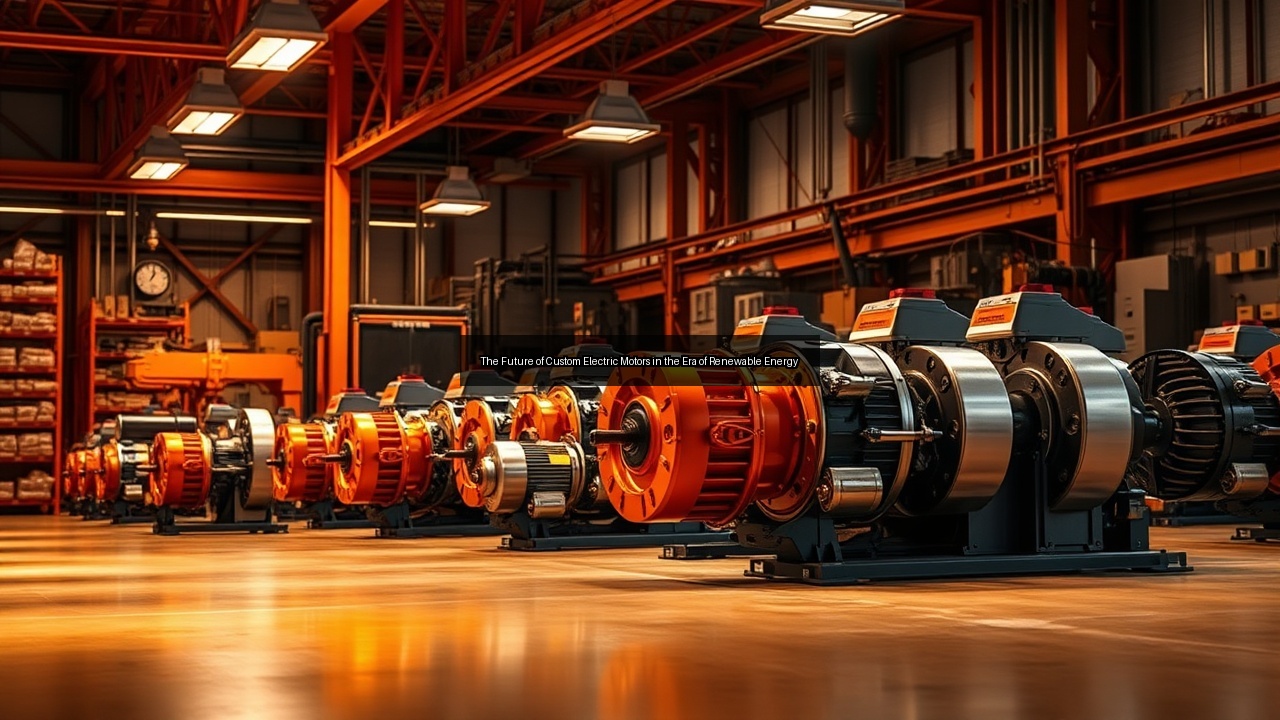
The Role of Custom Electric Motors in Renewable Energy
Understanding Custom Electric Motors
Custom electric motors deliver tailored performance for renewable energy systems where standard designs fall short. Engineers specify exact torque curves, voltage ratings, and mounting configurations to match wind turbines, solar trackers, and hydroelectric generators. These motors convert electrical energy into mechanical motion with precision that off-the-shelf units cannot achieve. Manufacturers build them around specific application data such as load profiles and environmental conditions, ensuring reliable operation across decades of service.
Direct current models often power smaller distributed generation setups, while alternating current versions handle grid-scale equipment. A custom motor integrates seamlessly with inverters and battery banks, reducing energy losses during conversion. Companies that produce these units work directly with project developers to refine every parameter before production begins. This collaboration yields equipment that maximizes output from intermittent renewable sources.
Importance of Efficiency in Electric Motors
Efficiency ratings determine how much generated power reaches the end user instead of dissipating as heat. High-efficiency custom motors reduce operational costs in renewable installations by lowering electricity consumption during continuous duty cycles. Advanced winding techniques and premium materials cut core losses and improve power factor across varying loads. Operators track these metrics through embedded sensors that report real-time performance data.
Renewable projects favor motors that maintain peak efficiency even under partial loads common in solar and wind applications. Every percentage point gained translates into measurable annual savings on large-scale farms. Engineers optimize rotor and stator designs to match the expected duty cycle, avoiding oversized units that waste energy. The result supports faster payback periods for capital-intensive renewable infrastructure.
Benefits of Customization for Renewable Applications
Customization allows motors to withstand harsh conditions at remote wind sites or coastal solar arrays. Special coatings protect against salt spray and extreme temperatures while reinforced bearings handle continuous vibration. Project teams specify exact shaft lengths and flange patterns so motors drop directly into existing generator housings without adapters. This approach shortens installation time and reduces downtime during maintenance cycles.
Custom motors also integrate with smart controls that adjust speed based on real-time resource availability. Operators gain flexibility to scale systems as energy demand grows without replacing entire drivetrains. The tailored approach supports hybrid setups combining solar, wind, and battery storage where motor characteristics must align across multiple power inputs. Overall system reliability improves when each component matches the unique demands of its renewable environment.
Types of Custom Electric Motors for Renewable Solutions
Brushless DC Motors: The Future of Efficiency
Brushless DC motors eliminate mechanical brushes that create friction and require regular replacement. Electronic commutation delivers precise speed control and higher efficiency across a wide operating range. Renewable energy developers choose these motors for solar tracking systems and small wind turbines where reliability directly affects energy harvest. Reduced maintenance needs lower lifetime costs in installations far from service centers.
Custom brushless DC designs incorporate specific voltage ratings that match battery outputs in off-grid applications. Engineers adjust magnet arrangements and winding configurations to optimize torque at low speeds typical of wind rotors. These motors run cooler than brushed alternatives, extending component life in sealed enclosures. Integration with maximum power point tracking controllers further boosts overall system performance in variable weather conditions.
Synchronous Motors: Optimizing Performance
Synchronous motors maintain constant speed synchronized with grid frequency, making them ideal for large generators in hydroelectric and wind plants. Custom versions allow exact pole counts and rotor constructions that match turbine output characteristics. High power factor operation reduces reactive power penalties from utilities and improves grid stability during renewable integration.
Manufacturers tailor synchronous motors with permanent magnet or wound-field rotors depending on application requirements. Precision engineering ensures minimal cogging torque for smooth rotation at variable wind speeds. These motors excel in continuous duty where efficiency gains compound over years of operation. Grid operators value their ability to provide reactive power support alongside active power generation from renewable sources.
Induction Motors: Versatility in Applications
Induction motors offer robust construction and simple control that suits diverse renewable setups from pumps to conveyor drives. Custom induction motors accommodate specific voltage, frequency, and enclosure requirements for harsh outdoor environments. Their inherent slip characteristics provide natural overload protection during gusty wind conditions or sudden load changes in solar farms.
Engineers optimize rotor bar designs and stator slots to achieve desired starting torque and efficiency curves. Custom induction motors pair effectively with variable frequency drives that adjust speed according to renewable resource fluctuations. This versatility extends to auxiliary systems such as cooling fans and tracking actuators where durability outweighs the need for ultra-precise positioning. Widespread availability of compatible components further simplifies long-term maintenance planning.
Manufacturing and Supply Chain Dynamics
Precision Engineering in Custom Motor Production
Precision engineering defines every stage of custom motor manufacturing from initial design to final testing. Computer-aided modeling predicts thermal behavior and mechanical stresses before prototypes reach the shop floor. Tight tolerances on air gaps and winding placement ensure consistent performance across production batches. Quality teams verify each unit against customer specifications using dynamometers and vibration analysis equipment.
Advanced machining centers produce housings and shafts that meet exact dimensional requirements for seamless integration with generators and drivetrains. Material traceability programs track every component from supplier to finished motor. This level of control minimizes field failures in critical renewable infrastructure. Manufacturers maintain close communication with clients throughout the process to accommodate design refinements without delaying delivery schedules.
Inventory Management for Customized Motors
Effective inventory management balances the need for rapid customization against the cost of holding specialized components. Suppliers stock core elements such as laminations and magnets while final assembly waits for confirmed orders. Digital systems track lead times for unique parts and forecast demand based on renewable project pipelines. This approach reduces excess stock while meeting tight construction timelines.
Strategic partnerships with component vendors allow quick sourcing of rare materials when custom motor specifications change. Modular design principles enable partial pre-assembly of common subcomponents that finish quickly once orders arrive. Renewable energy contractors benefit from shorter wait times without sacrificing the tailored performance their projects require. Transparent communication between manufacturers and buyers keeps inventory aligned with actual deployment schedules.
Sustainable Manufacturing Practices
Sustainable manufacturing practices reduce the environmental footprint of custom motors used in renewable energy. Facilities recycle copper and steel scrap generated during production while sourcing materials from suppliers with verified low-carbon processes. Energy-efficient equipment and water recycling systems lower operational impacts at the plant level. These measures align motor production with the clean energy goals of the systems they serve.
Design teams prioritize materials that extend motor life and simplify end-of-life recycling. Reduced packaging waste and optimized shipping routes further decrease emissions associated with distribution. Renewable developers increasingly request documentation of these practices as part of supplier qualification. The result supports circular economy principles while delivering high-performance motors for next-generation energy infrastructure.
Innovations Driving the Future of Custom Motors
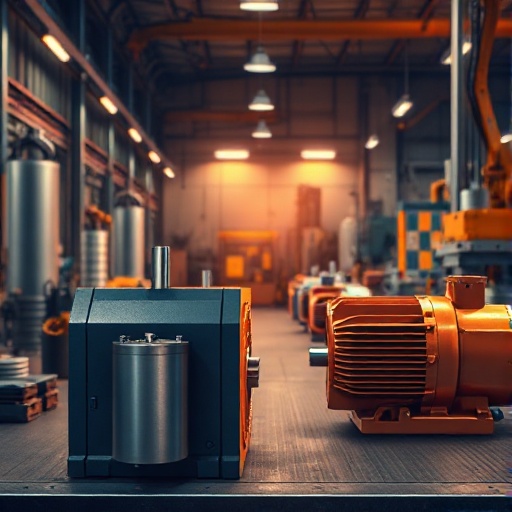
Integration of DC Motors in Green Technology
Direct current motors continue to advance green technology through improved power electronics and control algorithms. Custom DC motors power electric actuators in solar trackers and small-scale hydroelectric units where battery compatibility simplifies system architecture. High-efficiency designs reduce conversion losses between photovoltaic arrays and mechanical loads. Engineers refine commutation strategies to maintain smooth operation across wide voltage ranges from variable renewable sources.
Recent developments include integrated controllers that eliminate external drive cabinets and reduce wiring complexity. These compact units fit into space-constrained renewable installations without sacrificing performance. Operators report improved reliability in remote locations where service access remains limited. Continued refinement of DC motor technology supports expanding deployment of distributed generation projects worldwide.
Advancements in Servo Motor Applications
Servo motor technology brings precise positioning to renewable applications that demand dynamic response. Custom servo motor units control blade pitch in wind turbines and mirror angles in concentrated solar power plants. High-resolution encoders and rapid torque response enable real-time adjustments that maximize energy capture during changing conditions. Integrated cooling and reinforced gearboxes extend service intervals in exposed environments.
Manufacturers tailor servo motor windings and feedback devices to match specific communication protocols used in modern renewable control systems. These motors deliver the accuracy required for multi-megawatt installations while consuming minimal standby power. Field data from operating plants guides iterative improvements in bearing life and thermal management. The resulting equipment supports higher capacity factors across utility-scale renewable assets.
The Rise of Gear Systems in Electric Truck Designs
Gear systems paired with custom motors enable efficient propulsion in electric truck platforms that support renewable supply chains. Multi-speed transmissions optimize motor operation across highway speeds and heavy-load starting conditions. Engineers specify gear ratios that keep motors within peak efficiency bands while meeting torque demands of freight applications. Integrated sensors monitor oil condition and temperature to predict maintenance needs.
Lightweight composite housings and advanced lubrication reduce parasitic losses in these drivetrains. Custom motors designed for truck duty cycles incorporate high continuous torque ratings and robust insulation systems. Fleet operators gain extended range and lower energy consumption when motors and gears work together under real-world conditions. This integration accelerates adoption of electric trucks that transport components for wind and solar projects with zero tailpipe emissions.